
Our Research
How humans achieve their remarkable motor abilities remains a mystery. Fluent, coordinated movements seem effortless, and through learning we can master entirely new skills—riding a unicycle along a rail while balancing a stack of porcelain bowls, for instance. Machines, by contrast, still struggle to move and learn in the physical world as gracefully as we do, which is why human-like motor intelligence is often called a holy grail of artificial intelligence. Yet the basic cognitive and neural mechanisms of human motor control and learning are still far from understood.
The Motor Control Lab is part of the Brain and Cognitive Sciences program in the School of Psychological and Cognitive Sciences at Peking University. We study human sensorimotor control using psychophysics, behavioral experiments, computational modeling, virtual reality, biomechanics, and neuroimaging.
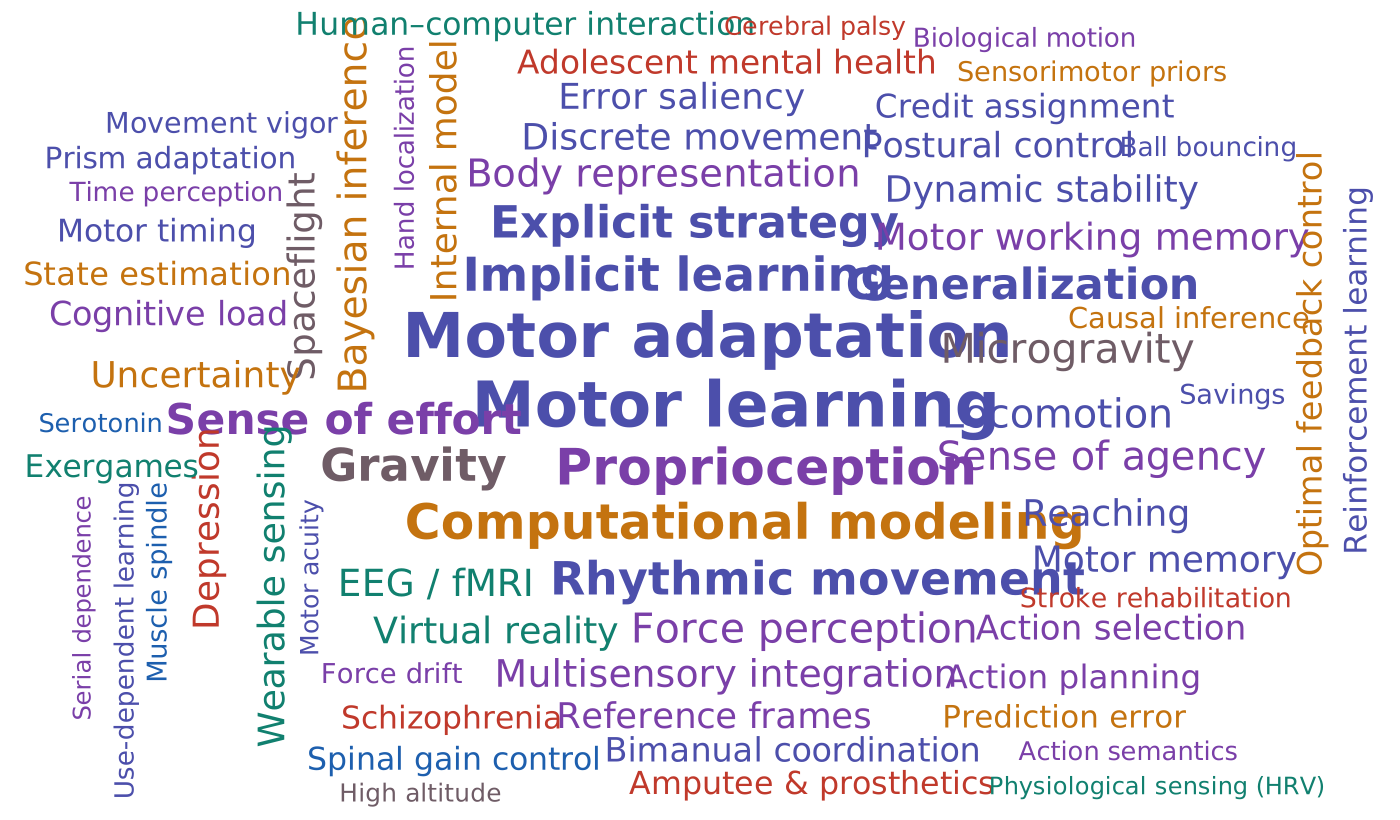
Our basic research asks how the brain controls movement, how it learns new movements, and how action and perception shape each other. Our applied research turns these insights to human–machine interaction and rehabilitation, to the study of mental disorders through movement, and to human performance in space. In collaboration with the China Manned Space Program, we run sensorimotor experiments aboard the China Space Station, Tiangong.
More about our research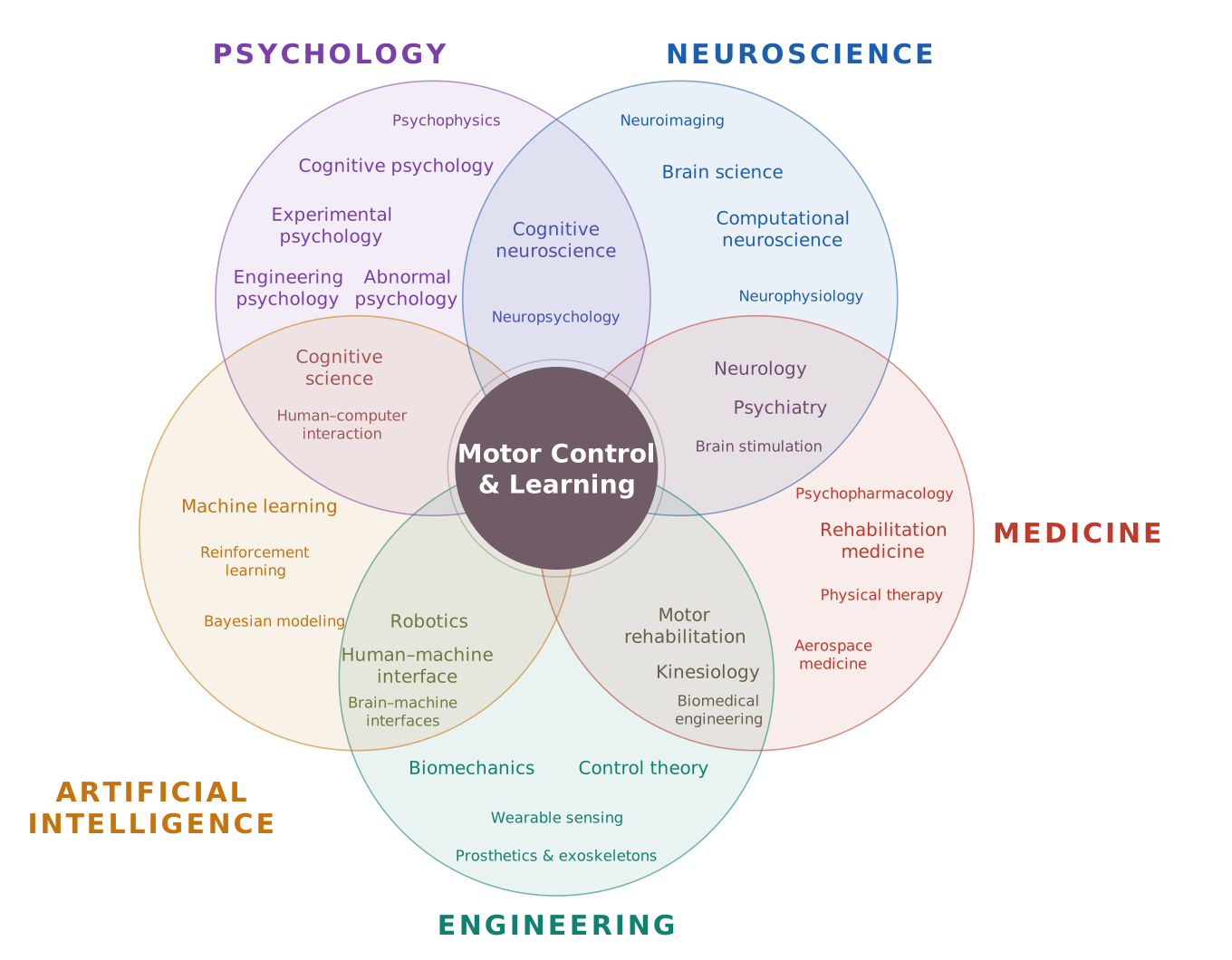
Select an image to view it at full size.
Contact us